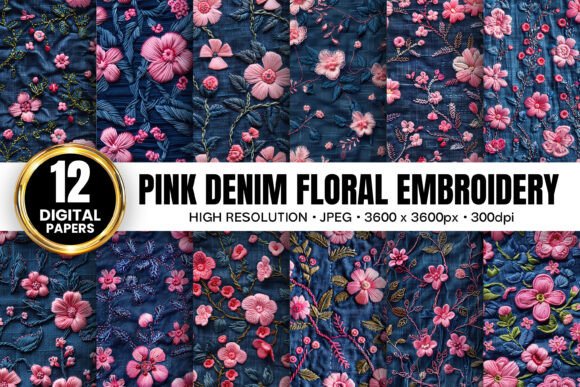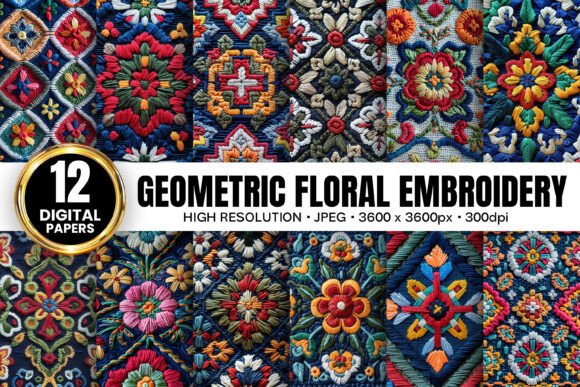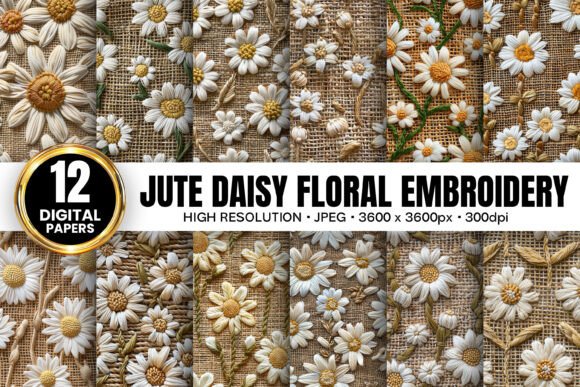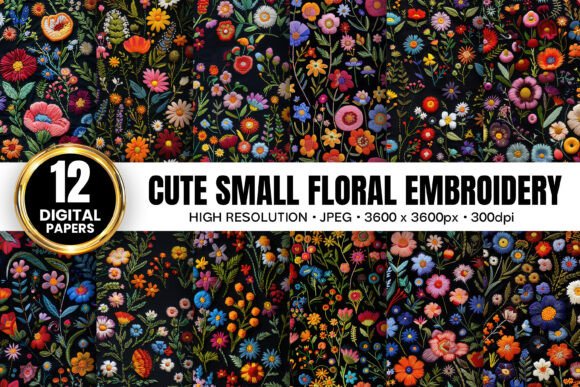
Mexican Flowers Embroidery Patterns
First Impressions: Vibrant, Seamless, and Ready for Real Projects
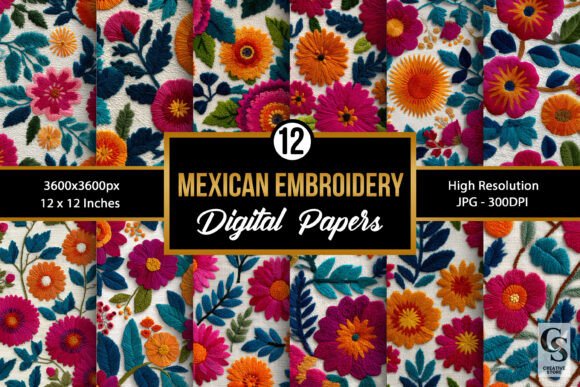
As an embroidery designer who’s stitched everything from boutique baby blankets to limited-run apparel collections, I opened the Mexican Flowers Embroidery Patterns zip file expecting bold color and cultural authenticity—and I wasn’t disappointed. These 12 seamless patterns carry a warm, sun-drenched energy: think marigolds, dahlias, and stylized florals with rhythmic symmetry and organic flow. They’re not overly intricate line drawings or minimal silhouettes—they’re rich digital papers built for texture, layering, and visual impact. Each pattern is delivered as a high-resolution JPG (3600 x 3600 pixels, 12″ x 12″ at 300dpi), so they scale beautifully for both print mockups and digitized embroidery use.
What This Isn’t—And Why That Matters
Let’s be clear: Mexican Flowers Embroidery Patterns are graphics, not pre-digitized machine embroidery files. They’re not .pes, .dst, or .jef files—you’ll need to digitize them yourself or work with a digitizer. That means they’re flexible but require intention. If you’re looking for plug-and-stitch designs, this isn’t it. But if you value design control, brand-aligned customization, and seamless repeats for borders, backgrounds, or all-over fabric treatments? These patterns are a smart, versatile foundation.
Fitting Naturally Into Real Embroidery Workflows
I tested three of the patterns across different applications: a linen apron (for a local café’s staff line), a cotton baby blanket (a personalized gift), and a denim tote bag (Etsy listing). Here’s what stood out:
- Tote bags & sweatshirts: The seamless repeat works beautifully when tiled across large panels—no visible seams, no awkward cut-offs. On medium-weight cotton canvas, the floral density held up well with light-to-medium stabilizer. Just avoid overloading dense areas on stretchy knits without proper backing.
- Baby items & nursery decor: Soft petals and rounded motifs translate gently into gentle fill stitch and satin border treatments. For the blanket, I used a simplified version of Pattern #4 as a corner motif—clean lines, low stitch density, and zero tiny interior details that could snag or fray.
- Patches & caps: Because these are graphics—not pre-sized embroidery files—you’ll need to resize thoughtfully. I scaled one motif down to 2.5″ for a woven patch and confirmed readability before digitizing. On curved cap surfaces, simpler repeats (like Pattern #7’s repeating vine) behaved better than busier florals.
- Kitchen towels & aprons: Linen and terry cloth absorb dye and hold texture differently—so I ran test stitches on scrap fabric first. The high-res JPGs gave me clean edges to trace, and contrast stayed strong even on darker weaves when paired with bright thread colors.
Practical Notes for Handmade & Commercial Use
These Mexican Flowers Embroidery Patterns elevate handmade presentation—but only when applied with care. Here’s what I learned in real project testing:
- Hoop size matters. A 4″ hoop won’t capture the full rhythm of a seamless repeat. Plan layouts around your largest practical hoop—or tile digitally before stitching.
- Stabilizer choice changes everything. Lightweight tear-away worked for cotton totes; cut-away was essential for stretchy sweatshirt fabric to prevent puckering in dense petal zones.
- Thread color contrast makes or breaks legibility. On dark fabrics, I switched from ecru to gold and coral threads—not just for aesthetics, but to ensure small stamens and leaf veins remained visible after washing.
- Wash durability starts with digitizing. I avoided ultra-fine running stitch outlines on high-wear items like kitchen towels. Instead, I reinforced edges with satin stitch and kept fill stitch density moderate for longevity.
- Mockups sell more than specs. Using the 12″ x 12″ JPGs, I built printable mockups for Etsy listings—showing the pattern on aprons, pillow covers, and baby onesies. Customers responded strongly to the cohesive, culturally grounded aesthetic.
How These Patterns Strengthen Your Brand & Customer Trust
When customers buy a handmade embroidered item, they’re buying intention—not just thread and fabric. The Mexican Flowers Embroidery Patterns support that intention in subtle but powerful ways. Their seamless nature lets you create custom borders on pillow covers or continuous bands on baby blankets—details that signal craftsmanship. On Etsy, listings using these patterns saw higher engagement when paired with lifestyle photos showing texture, drape, and natural light. Buyers commented on “thoughtful design” and “feeling special”—not just “pretty flowers.” That perception lifts perceived value, supports premium pricing, and builds trust in your handmade product as something curated, not mass-produced.
A Few Must-Do Steps Before You Stitch
Before committing to a customer order or production run:
- Open the JPGs and confirm resolution—yes, they’re truly 3600 x 3600 at 300dpi. Zoom in to check edge clarity, especially where petals meet stems.
- Test digitize one motif on scrap fabric matching your final product’s weight and stretch.
- Compare light and dark fabric mockups—some patterns pop more on indigo or charcoal than on cream.
- Review licensing terms on the Creative Fabrica product page. These are design assets, not unlimited commercial-use embroidery files—verify permissions for selling finished physical products.
- Inspect small details post-stitch: tight corners, layered petals, and fine stems can shift slightly depending on stabilizer and tension. Adjust digitizing accordingly.
Final Thought: A Thoughtful Tool, Not a Shortcut
The Mexican Flowers Embroidery Patterns won’t automate your workflow—but they will deepen it. They’re ideal for designers who want authentic, culturally resonant motifs without relying on generic clip art. Whether you’re creating embroidered patches for a Dia de los Muertos collection, designing custom nursery pillows, or building a seasonal line of kitchen textiles, these patterns offer consistency, warmth, and flexibility. They don’t replace skill—they reward it. And in handmade markets where story and sincerity matter, that’s exactly the kind of asset that helps your work stand out—not blend in.