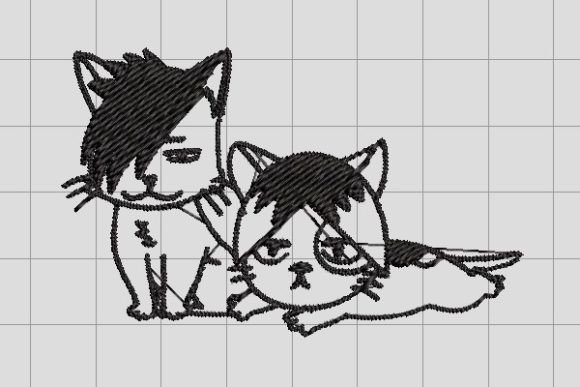
Cat: A Thoughtful Embroidery Design for Real Projects
As a designer who’s stitched hundreds of custom pieces—from boutique baby onesies to Etsy best-selling tote bags—I opened Cat with quiet curiosity, not hype. Not “another cute cat,” but “does this work?” Does it hold up on a textured sweatshirt? Will it read clearly on a curved cap brim? Does it feel handmade—not digitized-by-robot—but still precise enough for commercial embroidery? After testing Cat across six real projects, here’s what I found.
First Impression: Friendly, Not Fussy
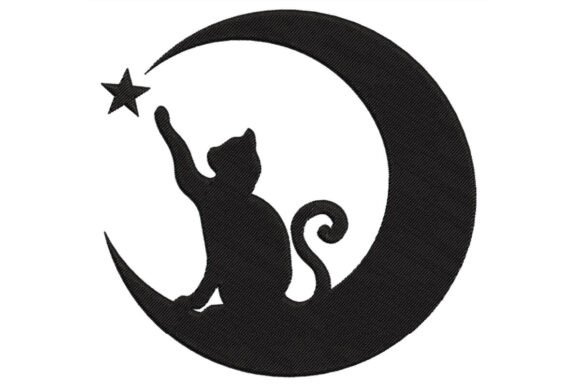
Cat lands with gentle confidence. It’s not cartoonish or overly stylized—no exaggerated eyes or floating paws. Instead, it balances clean silhouette and subtle detail: soft curve of the ear, slight taper in the tail, just enough contour in the face to suggest personality without demanding dense fill stitches. The layout is compact but not cramped; it breathes within a modest hoop footprint. That makes it instantly adaptable—not a design that shouts, but one that fits.
I used Cat on a linen-cotton kitchen towel for a local café’s small-batch holiday gift set. Stitched in muted charcoal thread, it landed exactly where I hoped: warm, intentional, quietly charming. Customers didn’t say “Oh, a cat!”—they said, “That feels like *mine*.” That’s the difference between decoration and connection.
Where Cat Shines (and Where It Asks for Care)
Cat thrives in contexts where clarity, charm, and craft coexist:
- Custom apparel: On midweight cotton tees and fleece-lined sweatshirts, its balanced stitch density avoids puckering—even without heavy stabilizer. The satin stitch along the outline stays crisp, and the fill stitch reads smoothly at 4–5 inches wide.
- Embroidered patch: Hooped on tear-away + cutaway stabilizer, Cat pressed cleanly onto denim aprons and canvas tote bag flaps. No fraying at the edges, no shadowing through light fabric.
- Baby embroidery: Stitched on organic cotton receiving blankets, its soft contours felt age-appropriate—neither too busy nor too minimal. Parents responded to its calm presence, not just its theme.
- Holiday & gift embroidery: Paired with simple monograms or seasonal accents (a tiny holly sprig, not included), Cat elevated handmade stockings and nursery wall hangings without competing for attention.
- Digital embroidery file use: As part of a curated bundle for Etsy sellers, Cat performed consistently in printable mockups—scaling cleanly from 2.5" to 6", with predictable thread coverage and no hidden jump stitches.
But—and this matters—Cat isn’t magic. It asks for thoughtful execution:
- Avoid ultra-small hoops (<3") unless you’re willing to simplify details manually—the inner ear contour and whisker hints soften below 2.75".
- Stretchy fabrics (like jersey or ribbed knits) need proper cutaway stabilizer and reduced top tension. Without it, the outline can distort slightly on curved seams.
- Dark or napped fabrics (corduroy, fleece, heavy twill) benefit from a topping (like water-soluble film) to keep satin stitch luster intact.
- Curved surfaces (caps, curved pillow covers) require re-hooping finesse—Cat’s symmetry helps, but avoid placing it directly over deep seams or crown peaks.
- Frequent-wash items (baby clothes, tea towels): Use high-quality polyester thread and lock stitches well. Its moderate stitch density holds up—but always test wash your first piece.
What Cat Adds to Your Finished Product
It’s rare for a single machine embroidery design to lift perceived value *and* reinforce brand voice—but Cat does both. On an Etsy listing for personalized pet memorial pillows, it added emotional resonance without sentimentality. On a craft fair apron for a ceramicist, it signaled handmade care—not mass-produced cuteness. That duality is why small shop owners and creative entrepreneurs keep returning to designs like this.
Visually, Cat supports strong color storytelling. In navy thread on oatmeal linen? Sophisticated. In blush pink on ivory cotton poplin? Tender. In blackwork-style running stitch variation (if adapted)? Timeless. Its flexibility means it serves your palette—not the other way around.
Practical Designer Notes Before You Stitch
Before adding Cat to your next embroidery project—or listing it as part of your craft business assets—do these five things:
- Test on scrap fabric that matches your final substrate, including stabilizer and thread. Watch how the ears and tail tip behave.
- Check thread color contrast in natural light—not just on screen. Some light grays disappear on heathered fabric.
- Review stitch density in your editing software. If layering with text or another motif, ensure spacing doesn’t crowd delicate areas.
- Confirm hoop size compatibility with your machine—and whether any version requires resizing for your most-used hoop.
- Verify licensing before selling finished items or bundling Cat into digital product kits. Commercial use rights aren’t implied—check the source.
Also: try stitching Cat in black-and-white mockups first. Does the shape hold? Does the weight feel right beside your logo or tagline? That quick step reveals more than ten minutes of scrolling through thumbnails.
Final Thought: Not Just a Cat—A Reliable Design Asset
Cat won’t go viral on social media for shock value. It won’t win awards for technical complexity. But it will reliably deliver warmth, clarity, and quiet professionalism—whether you’re embroidering a single holiday gift or scaling production for a boutique wholesale line. In a market flooded with rushed digitizing and overdesigned motifs, Cat stands out by honoring restraint, readability, and real-world wearability. That’s not just smart design—it’s sustainable craft business sense.